
Best OnlyFans Arab Creators
Explore the top Arab creators on OnlyFans in 2026. Our directory features verified Middle Eastern creators who share exclusive, culturally rich content with their subscribers. Discover authentic Arab OnlyFans accounts with premium content and engaged fan bases.

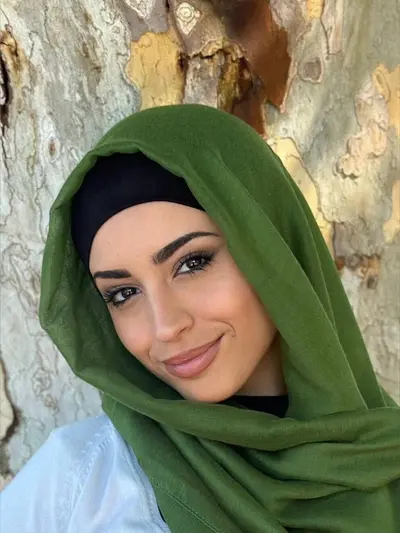
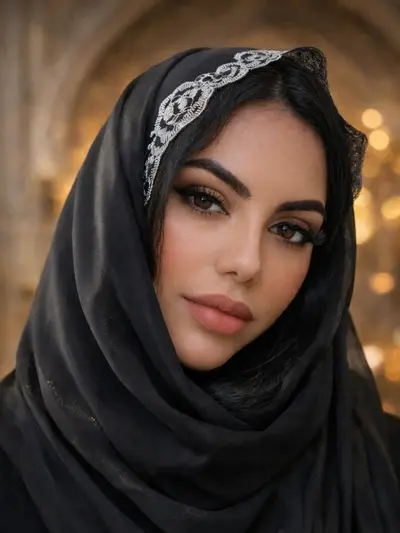

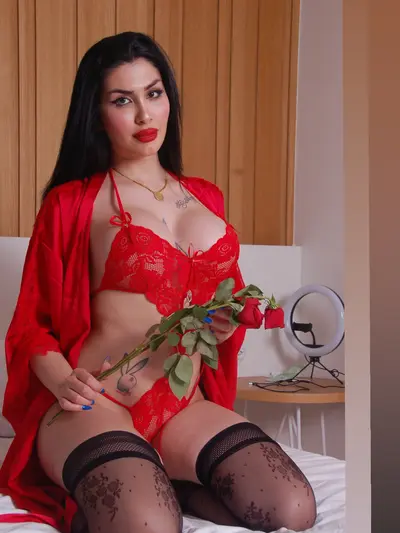






How to choose from this collection
Dance sits closer to the centre of this category than of any other regional tag, and it is not decorative. Raqs sharqi and its older, earthier cousin baladi are built on isolations, on moving the hips and ribcage independently of everything else while the upper body stays composed, and that is exactly the kind of movement a camera loves: the frame can stay still and the performer supplies all the motion. The costume tradition supports it. A coin belt turns every shimmy into sound, a hip scarf makes a small movement legible from across a room, and veil work fills a frame with fabric that catches light on its way through the air. Khaleeji hair dance works on a different principle again, with a loose thobe and swung hair carrying the movement. Filming any of it well takes a wide locked frame, a fast enough shutter to keep the coins from smearing, and enough light to shoot at that shutter speed cleanly, which is why the accounts that do it properly stand out immediately.
Concealment is the visual signature of the niche and it functions as an aesthetic system rather than an absence. Masks, cropped framing, hair drawn across the face, compositions built from the collarbone down, and shadow used as a structural element are all standard, and creators who work this way develop a real facility with it. Without a face to carry expression, everything shifts onto the hands, the spine, the angle of a shoulder and the pace at which something is revealed. Kohl-lined eyes above a covering are one of the most-used images in the category precisely because the eye alone can carry so much. Lighting for deliberate darkness is harder than lighting for brightness: the shadow has to stay clean rather than turning to noise, which means a small controlled source and a camera held at a low sensitivity rather than a bright room with the exposure pulled down afterwards.
Styling carries a heavy share of the work. Layering is the organising principle, with a kaftan, an abaya or a heavily embroidered thobe over something quite different, so that the structure of a set is the transition between the two rather than a single state. Fabric choice is deliberate in the same way it is in couture: georgette and chiffon for movement and translucency, satin for the highlight that runs along a fold, heavy embroidery and gold thread for texture that reads on camera. Gold jewellery is a constant, stacked at the wrist and layered at the neck, and henna gives the hands a graphic quality that suits a niche where hands do so much of the expressive work. Mother-of-pearl inlay, patterned tile, mashrabiya screens and low warm lamps recur as set dressing, and a well-dressed corner of a room does more for a set here than an expensive camera would.
Language is a genuine part of the content rather than a label on it. Arabic in practice is a family of dialects that are not interchangeable, and the difference between Levantine, Egyptian, Gulf and Maghrebi speech is immediately audible to anyone who knows the region. Creators perform in their own, and audiences seek out particular ones, which is why audio and voice-note material occupies a larger share of this category than of most. The intimate register is a long way from the formal Arabic of broadcasting, and moving into it convincingly is a performance skill. One of the category's distinguishing pleasures comes out of the Maghrebi community in France, where creators move between French and Moroccan, Algerian or Tunisian Arabic within a single sentence, switching language at whatever moment they want to land.
The working population is concentrated in the diaspora, for reasons that are structural rather than accidental: producing this material while living in most of the Middle East and North Africa carries serious legal and social exposure. France, Belgium, Germany, the Netherlands, the United Kingdom, Canada and the United States hold most of the creators in the tag, and each of those communities has its own accent in more than the literal sense, with French Maghrebi creators, Levantine creators in Germany and Gulf-heritage creators in Britain producing visibly different work. Creators who remain in the region generally work under tight anonymity and compose with great care about what is identifiable in a frame, which is part of where the category's aesthetic of concealment came from in the first place.
The calendar shapes the year in a way that is worth knowing simply because it is characteristic. Many creators, including those living abroad, step back from posting through Ramadan and around Eid, and some observe other pauses through the year for family or religious reasons. It is a rhythm rather than an interruption, and creators handle it in different ways: some bank material in advance so a feed keeps moving, some announce a pause and return with a substantial set afterwards, some simply mark the occasion in their content, since Eid styling with new clothes and heavy gold is a set piece in its own right. The niche runs on an annual cycle more visibly than most.
On the platform the category has grown from something quite thin into a scene with its own conventions. Early pages leaned heavily on a generic orientalist visual shorthand borrowed from stock imagery, and very little of that survives; what replaced it is grounded in things creators actually own and wear, and in regional specificity rather than a flattened idea of the region. Audio has grown into a major format. Dance-led accounts have become a recognisable strand rather than a novelty. Creators have also built cross-promotion circles within their own diaspora communities, which is how most of the collaborative work in the tag gets made, and the general standard of lighting and editing has risen sharply as those circles share equipment and advice.
Subscription structures lean toward a single mid-range monthly price that covers most of the feed, with paid extras kept to a smaller number, rather than the free-page-plus-unlocks model that dominates some other categories. Multi-month bundles are offered and discounted modestly. Custom work is organised around what the niche does best: audio in a specified dialect, named clips, outfit and dance requests, and scripted scenarios, each quoted individually with a stated delivery window. The scope creators define is tighter here than in most categories, with an uncovered face, a real name, distinctive jewellery and anything geolocatable kept outside it, and that boundary is a settled feature of how the category works. Time zones across the region and Western Europe sit one to four hours ahead of London and six to eleven ahead of North America, so the rhythm of a page here runs to a European evening.
Frequently Asked Questions
Who are the best Arab OnlyFans creators?
Browse the Arab collection to compare matching profiles. Featured entries appear first, followed by newer matching listings. This placement order is not based on subscriber reviews or engagement scores.
What content do Arab creators share on OnlyFans?
Arab creators share diverse exclusive content including glamour photoshoots, lifestyle posts, fashion showcases, and personalized subscriber interactions.
Are Arab OnlyFans accounts on KissMeHub verified?
A blue badge reflects the verification flag stored in the catalog. It is not a KissMeHub identity audit or a guarantee about the account's content. Check the linked account and current information before subscribing.