Best OnlyFans E-Girl Creators
Find the top e-girl creators on OnlyFans in 2026. These internet-culture inspired creators blend alternative fashion, gaming, and edgy aesthetics with exclusive content. Discover verified e-girl accounts here.
How to choose from this collection
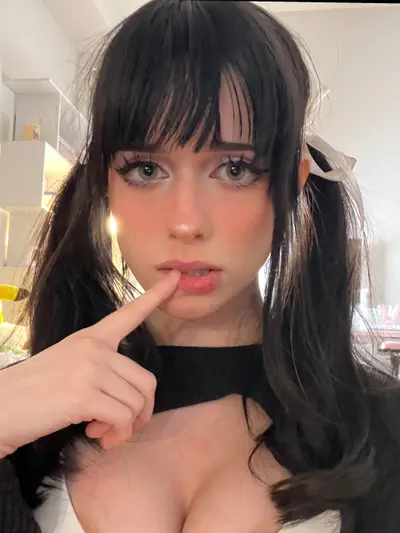
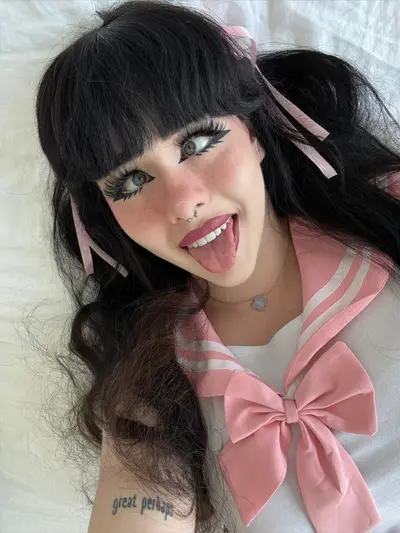
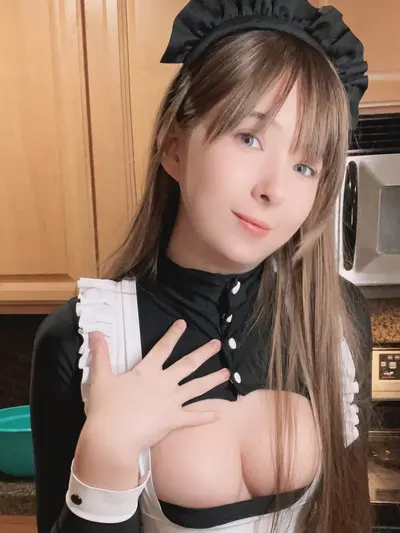
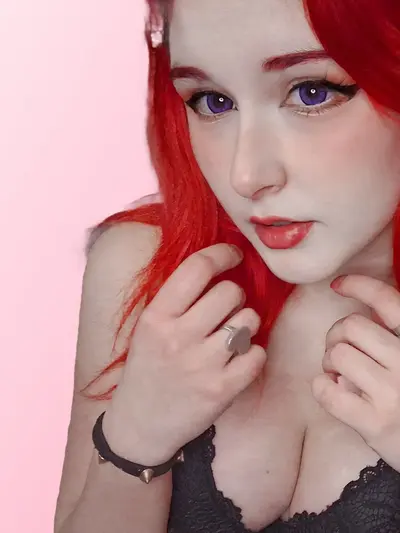
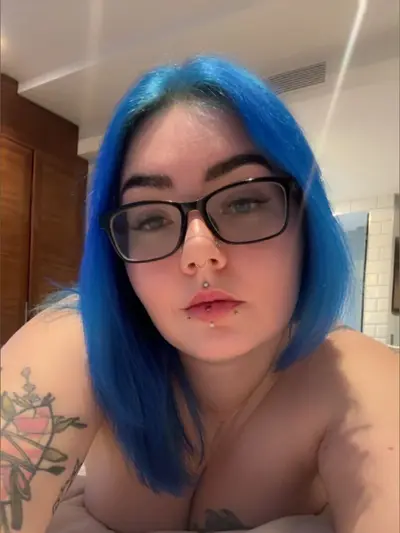
The e-girl face was designed for a small bright rectangle held at arm's length, and once that is understood the whole aesthetic makes sense. Blush is placed high and heavy, across the bridge of the nose as well as the cheeks, because a phone screen at that distance flattens modelling and swallows anything subtle. Graphic marks under the eye, whether hearts, stars, crosses or a line of dots, read as clean shapes at thumbnail scale where fine detail simply disappears. Liner is extended well past the corner so the eye holds its shape through compression and a wide front-facing lens. This is the first widely adopted look whose canonical output was never a photograph but a short vertical video, and every decision inside it answers the conditions of that format rather than the conditions of a studio.
Its ingredients are borrowed with unusual openness. Mid-2000s scene and emo styling supplies the heavy liner, the choppy fringe, the layered graphic tees and the willingness to treat hair as a statement rather than a frame. Anime supplies the blush placement and the enlarged, brightened eye. K-pop supplies the precision of the styling and the habit of coordinated looks. Skate and streetwear supply the silhouette, meaning oversized tops, chains, plaid and platform boots. Streaming culture supplies the lighting. The term itself had a life as ordinary internet slang for years before it attached to anything visual, and the look cohered around 2019 on short-form video, spreading as a makeup tutorial at least as much as a wardrobe, which is why the face has always been the most stable part of it while the clothes move around.
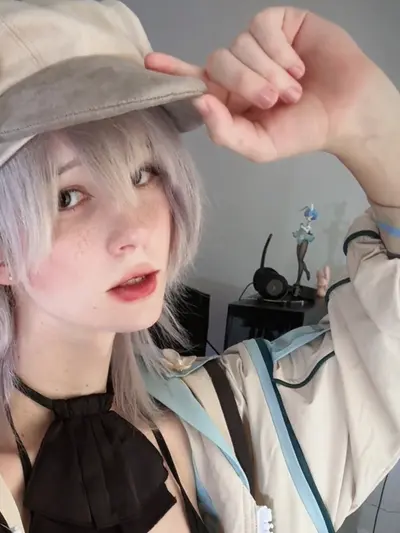
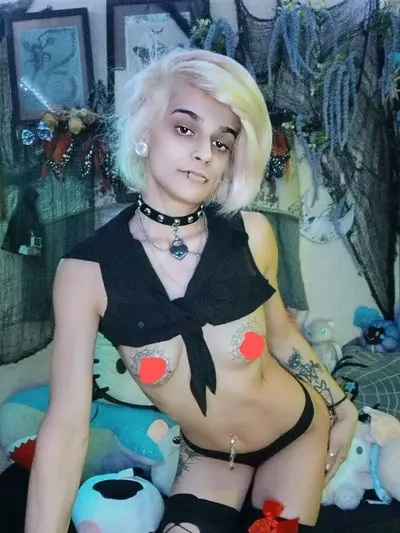
The craft is combination, and it is a genuine discipline. The references being mixed do not naturally agree: a Japanese street-fashion silhouette, an American scene fringe, a Korean styling logic and a piece of gaming iconography have no reason to sit together, and making them sit together is the work. Split-dyed hair is the emblem of it, two colours divided at the parting, and it changes how a page is composed as well as how it looks, because the split makes a head asymmetric and creators pose to it, turning so the division reads against the background. Chokers, layered silver, arm warmers, a striped long sleeve under a printed tee, a pleated skirt, coloured contacts, nail art and a septum ring are the vocabulary; which of them appear together, and in what proportion, is where an individual page becomes recognisable.
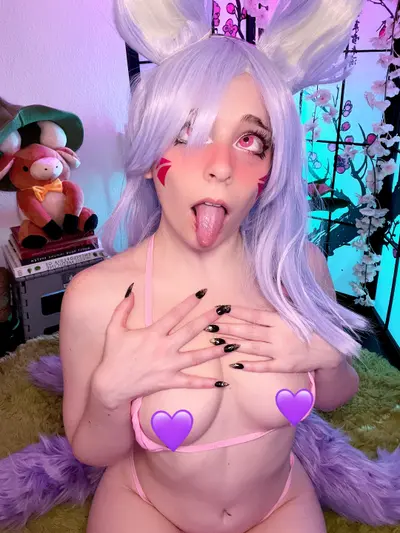
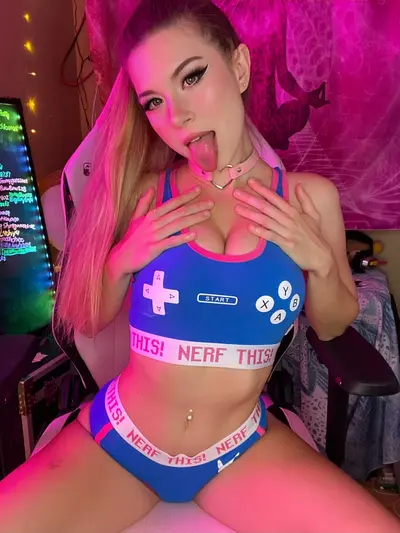
Colour is the other technical centre of the niche, and it arrives with a real problem attached. The magenta and cyan split lighting everyone associates with the look came from streaming desks and enthusiast computer builds rather than from photography, and saturated coloured light is destructive to skin: push a strong magenta across a face and the makeup detail the whole aesthetic depends on vanishes into a flat wash. The working solution is to divide the frame. A neutral or lightly warmed key handles the face and holds the marks, while the colour goes behind the subject, along the edge of the hair and into the background, at a fraction of the intensity people assume. Bleached hair takes coloured light beautifully and pale walls bounce it, so the effect can be strong while the face stays legible. Gels, cheap panels and light strips are all standard, and most of the result comes from placement rather than from equipment.
The makeup functions as a design practice rather than a fixed routine. Creators develop marks that belong to them, a particular arrangement under the eye, a signature colour pairing, a stamp reused often enough that it works as a personal insignia, and they iterate on it across months. Applying it is drawing rather than blending: symmetric freehand shapes on both sides of a face, a wing that has to match its opposite, edges clean enough to survive being seen large. A full face runs well over an hour, which is one reason so many pages here shoot several looks in a single day and release them across weeks.
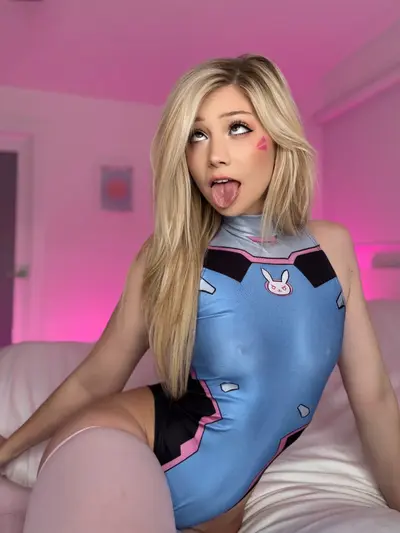
The tag covers several quite different kinds of page. Beauty-led creators treat the face as the subject, with tutorials, product talk and looks built from scratch. Music-adjacent creators run the aesthetic as scene membership, tied to hyperpop, breakcore, the emo revival or whatever the current club sound is. Anime-leaning creators pull the styling towards character work. Gaming-adjacent creators keep it at a desk with a headset and a schedule. Fashion and thrift-led creators build entirely out of second-hand finds and treat sourcing as content in itself. There is a softer pastel branch that keeps the marks and swaps the palette, and a harder cyber branch with vinyl, harnesses and synthetic hair. Pairs and couples working the look together are common.
On the platform the niche has broadened considerably since it arrived. What was close to a uniform in 2019 is now a family of substyles, and the label describes a way of lighting and editing as reliably as it describes a wardrobe. Production climbed as the cohort stayed with it: proper lights instead of a single ring, real cameras, backdrops and sets built into a corner of a room. Video became the default rather than the extra. And the mid-2000s revival that fed the look in the first place has come around a second time, so the emo and scene references in it are now being made by people consciously quoting rather than remembering.
Commercial structures follow the platform's two standard shapes. Free pages selling material through individual unlocks and message attachments are common, partly because discovery for this aesthetic still happens on public short-video platforms and the page is the destination rather than the shopfront. Flat monthly subscriptions carrying the full library are equally normal, usually at the lower to middle end of the range, with reduced rates across three or six months. Upper tiers tend to add video, uncropped sets, request priority or a group chat.
Requests here are almost always about a look rather than an act: a specific makeup, a colour combination, a named outfit, a set shot under particular lighting, video in something that has only appeared in stills. Anything requiring dye, a wig or an order carries a lead time, so quotes often come with a date attached rather than a turnaround in hours. What holds the category together through all of that is that nobody owns the look. There is no canonical version and no authority to defer to, which leaves every page a specific argument about how the parts go together, assembled by the person wearing it.
Frequently Asked Questions
What is an e-girl on OnlyFans?
E-girls are creators inspired by internet culture, featuring alternative fashion, bold makeup, gaming references, and edgy aesthetics. They often blend cosplay, anime, and punk elements into their unique style.
Do e-girl creators offer gaming content?
Many e-girl creators combine gaming streams, cosplay, and alternative fashion content. Browse our E-Girl category to find creators who match your interests.